
Dear Reader,
Words can be armor… or a mask.
Most people use them to hide.
They talk in safe slogans — quality service, fair prices, customer care.
It feels professional. It’s not.
It’s invisible.
Specifics make you believable.
They paint pictures. They build trust. They make people see you.
In this episode, Roy and I dive into the art of being courageously specific — in business, in writing, in leadership.
- Why vague language kills persuasion
- How Luke’s Gospel made stories unforgettable
- Why naming details takes guts — and wins loyalty
- And how the best storytellers (and salespeople) make you see it before you buy it
Because the world doesn’t remember generalities.
It remembers the details that cut like glass.
Speak clearly. Name it boldly. Show them what you mean.
That’s how you earn trust—and that’s how you sell.

Watch/listen above or read below.
Todd Liles: Hi, Roy. Another amazing episode about to come up of Todd Liles with the Wizard of Ads. And we have been on a narrative arc over the last couple of episodes where I create an idea, and then in the following episode, I sort of bring a new juxtaposition to it.
Roy Williams: Okay.
Todd Liles: So in the last episode, we talked about simple is more powerful and what should we cut? Well, today we’re going to talk about specifics, because specifics are always more powerful than generalities. Now, those two things aren’t necessarily at odds with each other, but I think they’re worth discussing. Does that sound good to you?
Roy Williams: Absolutely.
Todd Liles: All right. Wonderful. So let me just talk to the audience here for just a moment. Hey, guys. Today’s episode is about specifics, specifically, that generalities confuse, but specifics persuade. Because a lot of business owners think that general statements sound safer like, “Oh, we offer quality services at a fair price.”
But when you’re running a growing company and now you’ve got 15 people on payroll, 11 trucks in the field, vague promises isn’t going to keep those trucks busy. You need your ads to work. You need your CSRs, your technicians, and your salespeople to communicate clearly. So you don’t have time for fuzzy language and generalities. So I’m visiting with Roy today, and I’m asking, why do specific details sell better than broad claims? And how do we train ourselves and our teams to speak with precision?
Roy, segment number one is specifics make the invisible visible. There’s a great, great, great quote I love, and it’s actually from an article you wrote called Specifics and Generalities. And it’s this; “Specifics are always more believable than generalities.” This is true in every form of communication. So, Roy, talk to me, because you’ve already sort of hinted that you got a surprise for me. I don’t know if you’re ready for that surprise.
Roy Williams: Yeah, yeah, yeah. This is the deal. I could tell whenever you were talking about framing this with the company that has this many trucks and that they need to be used some specifics. I’m going, “Okay, yeah, that’s true, that’s true.” And I can give you an example of how they could use specifics in a powerful way. But when you said specifics, you meant facts and details about the product, the price, et cetera. You’re going, “Let’s just, instead of saying the ambiguous, high-quality service at everyday low prices,” that means nothing. Okay?
But whenever you name the service or the product and you name the price, now you can visualize and you can understand. Now they’re showing you, not telling you. They’re showing you an example that they’re talking about. Now, they’re showing it to you in your imagination. But let me first answer the question the way that you framed it. Okay? America is covered with houses about 1,600 feet, three bedrooms, two and a half baths.
If you have a home like that, we can replace the entire air conditioning system for $12,000. If I described your house and it’s time for you to replace the whole system, anybody charging you more than $12,000 is making you spend more than you have to spend. It’s a basic system, but it’ll work great. Now, here’s what’s interesting. I named a specific house size and a specific price for the system. Okay? Now all of a sudden, a person is armed with information. Man, that thing had no loopholes in it. See what I mean?
And it’s kind of like, “Dang, that takes courage.” And you know why the person reacts strongly to it? Because most people don’t talk that way. This person has confidence, this person has details, and they’ll name it. They’ll name the details and just go, “That’s what we’ll do.” Boom. And so that’s the specifics the way that you were referring to them. Let me give you another type of specific.
Todd Liles: Okay.
Roy Williams: And then we’ll talk about show, don’t tell. And the person who made a very powerful show, don’t tell statement made it many, many years before the invention of television or even photography. And so what he was talking about is show them using your words.
Todd Liles: Show them using your words.
Roy Williams: You show them using your words. I just showed you an air conditioning system and a house using words, not pictures.
Todd Liles: I’m with you.
Roy Williams: Using words, not pictures. And so when we say, “Show, don’t tell,” we’re not saying pictures, we’re saying pictures in the mind. Pictures in the mind that can be conjured by words delivered in any format. The written word, the spoken word. Now, here’s the deal. Matthew, Mark, Luke, John, called the synoptic gospels. Did you know that in the New Testament gospels, when a story has people’s names in it and the people all have names… Zacchaeus that climbed the sycamore tree. It’s in the book of Luke. All the stories where people have names are in Luke.
Todd Liles: I didn’t know that.
Roy Williams: Yep. Luke names what kind of a tree it was and the guy’s name who was so short he had to climb the tree to see Jesus as he passed by. Matthew doesn’t do it. He was a tax collector. He’s a numbers man. Mark didn’t do it. He was an activities guy. And half of the whole gospel or two-thirds of the whole Gospel of Mark, it’s the shortest one, make the point, it’s all about the passion. It’s all about the crucifixion. But Luke was a physician. Luke was a people person. And so everybody had a name and included lots of details. And you can visualize the things that happen in the book of Luke better than you can in any of the other gospels.
Todd Liles: So as a writer, see, I’m sure pastors have recognized that. And I’ve been through the gospels. Those details didn’t stand out to me. But as a writer, that must pop out to you. It’s obvious.
Roy Williams: No, no, no. Somebody taught me that. I didn’t notice it on my own.
Todd Liles: You didn’t notice. Okay. Well, good for you for being honest.
Roy Williams: Yeah, yeah. No, the point is this, he uses specifics because the story… See, anytime you remember a story from the New Testament and you know the names of people or what kind of a tree it was, it’s always Luke. Just be aware, that was always Luke. And so you remember the stories very vividly. Why? Because he gave you specifics by which to remember the stories. And so that’s the power of specifics.
It doesn’t have to be information about making decisions. It doesn’t have to be 1,600-foot house, three bedrooms, two and a half bath. That’s a very specific house that many, many, many, many, many, many, many, many millions of people own and most common house in America. And so to name the most common house in America and a specific price for a new air conditioning system, basic AC, yeah, it’s powerful because it is specific.
But naming the type of tree and the name of the man and the fact that he was very short, which explains why he had to climb the tree. We’re given three specifics about this moment. And the average person remembers the story of Zacchaeus who climbed the tree, okay? And Jesus looked up and said, “Hey.” And he was a horrible little guy. He was a little criminal. He was a tax collector, which basically was a con man back in that day. And he says, “Hey, you, Zacchaeus,” called him by name, “We’re going to have lunch at your house today.” And everybody was gasping, going, “You obviously don’t know what kind of man that is.” And Zacchaeus comes down and he goes, “Hey, man, anybody I’ve overcharged, I’m going to repay it double.” And he just starts talking about how he’s going to turn his life around. And it’s kind of like that moment is so memorable because of specifics. And without the specifics, it’s less memorable because you don’t imagine a little short guy that everybody hates. God, that’s an interesting story.
Now, the person before images were really a thing, right? Leo Tolstoy, Russian writer, he said, “Don’t tell me the moon is shining; show me the glint of light on broken glass,” And so he’s saying when you talk about how the moonlight was glinting off the broken glass, you know that it’s dark and you know that the moon is shining. He doesn’t tell you the moon is shining. He makes you see the moon shine by the glint on the broken glass. And so the specifics are the glint of light on broken glass. And so if you tell them the moon was shining, it’s like, that’s just… That’s telling.
But to talk about the glint of the moonlight on the broken glass is to give them a very, very specific, tiny detail that a person notices. But now you’re in that moment. You’re in that moment. You see the glint of the light on the broken glass. You know the moon is shining without him having to tell you that the moon is shining and that it’s nighttime. And so Leo Tolstoy, one of the great writers, right, actually offered that advice. And so when we say, “Show, don’t tell,” show them in their imagination by using specifics to make them see something vividly, to make them understand something very, very, very specifically and so that they now understand it clearly enough. He was a short little guy named Zacchaeus. He was a tax collector. Everybody hated him. He climbed a sycamore tree to see Jesus as he passed by because he was too short to see over the crowd.
You give them those kinds of specifics, and they go, “Wow.” Now, the stuff that happens next, you have so much backstory, and you understand so many implied things. See what I mean? That when Jesus says, “Hey, man, I’m going to go home with you and have lunch,” it’s like, “What? Me? Wow.” And everybody’s going, “What? Him? Wow. Why that guy? He’s horrible.” And so that whole thing makes you understand just this huge thing about Jesus that made him special and different is because he knew that guy. He knew everything about that guy and chose him anyway. And you’re going, “Wow.”
And so Luke, unbelievably intimate, intimate storyteller. He’s making you see what he saw. He’s making you understand and feel what he felt. And it takes specifics to do that. And so anytime you’re telling any kind of a story. Yeah, yeah, yeah, include the square footage of the house and the price and the fact that it’s a basic air conditioner. Whatever you want to do. But I’m saying it’s not just limited to product or service offers. It’s part of storytelling in general.
Todd Liles: Yeah. You know, what it reminds me of is the first person that I think I ever heard talk about it was Jim Rohn. And he was talking about it from stage. And while I don’t remember the exact words, I can remember close enough to what he was talking about. Because he just started going into this story, and he was saying it was something along the lines of the following. It was January 22nd in 2000. It wasn’t 2000, it was like 1963. Jim Rohn’s been around. He goes, “I was a young man standing on the corner of a London street, and it was raining on my trench coat. I looked at my watch. I noticed that the time was slipping by minute by minute.” And he started going into this story, and you’re just listening, going, “Oh, my God, where’s this going?” And then he never finishes it. He stops and starts talking about why you were listening. And it was because he was giving very specific details. And then he began to transition.
Roy Williams: You could feel what he was feeling.
Todd Liles: You could feel what he was feeling. And then he started talking about if you were in just whatever space that you were in, how you would tie that in. And this is something that I have visited with technicians, and they don’t pick this up as easily as a salesperson does. But when you’re visiting with them and you’re talking about air conditioning, I have them do this exercise where I say, “Hey, Mrs. Smith, before we jump into this, I want you to go back in your mind. Now, I know that right now your air conditioning system is working, but I want you to imagine a time,” and you know when it was, it was a couple years ago when you were sitting in here in your living room and it started making this funny noise. And then all of a sudden you started feeling this heat coming up. And before you knew it, you were sweating, going, “What’s going on?” And lo and behold, you come over, you feel the vents, there’s no air blowing out of it, and you realize, “Wow, my air conditioning system is hot. It’s not working. It’s broke.”
And then you pick up the phone and you start searching for someone to call. Or maybe you get on your Google and you start looking, right? And you’re looking for an air conditioning provider, and you selected them and you called them. And for some reason, they’re not here today. I am. Why did you pick us this time? Because if they can get that person contemplating the bad things that have occurred and they tell you what it was, you will know what to avoid. And then later on, when you’re imagining the new picture, you start painting these very specific ideas about how comfortable you’re going to be.
And that goes from, and these are really… I’m showing my age. The people that I learned and studied from early when I was in sales was Jim Rohn. And more than Jim Rohn, it was Tom Hopkins and Zig Ziglar. I wore those tapes out. And I loved listening to Zig just tell stories about the Chop-O-Matic and clients going, “Will you cut your finger on it?” “Well, you can, but what you got to do is you got to pick it up and get it spinning.
And when it’s going real fast, if you want to cut your fingers, then you got to insert them under and into the blade. But as long as you use it properly on the table and never put your fingers to the blade underneath this guard, you will never get cut.” It’s like you hear all these specifics. So I love it. I love it when the story becomes vivid. And I’m actually surprised that you kicked off with an ad example to where you were saying 1,600-square-foot house. Wasn’t surprised about that. All over America. Cool. I’m probably in a house like this. I was surprised when you rolled the price out because I’m going, “Oh, wow, that’s bold.” That’ll work. That’ll work all day long. That’s stronger than a field of garlic, right?
Roy Williams: Yeah, yeah, yeah.
Todd Liles: But it’s bold.
Roy Williams: And everybody is… I mean, people are selling that for $13,500, $15,000, some people $16,000 for the same system. Or maybe it’s the two-star or three-star system. But what I’m saying is there are systems that are reliable, well-built systems. They’re basic, basic, basic. And as we talked about earlier, there are people who need that, and they don’t actually have the luxury of upgrading and doing better things than that. And I’m saying when you make room for entry-level, that doesn’t mean… And by the way, and you’re making margin on it, okay? It doesn’t mean that you’re giving up the opportunity to upsell. It just means you’re giving people confidence that you’ve got great prices because you have the confidence to name the price. And specifics are persuasive. Generalities are just wasting everybody’s time.
Todd Liles: I know there are so many home services people that are listening to this, and not just them, but that’s a large part of my audience is home service. I know their butt is…
Roy Williams: Their buttholes puckered up. I know.
Todd Liles: They’re puckered.
Roy Williams: There he goes. They don’t want to hear that. “So he’s crazy. He’s crazy. I can’t. No way.”
Todd Liles: “And you’re saying put your prices out there? No.” And you’re going, “Yeah.” And I’m going, “Oh, yeah, yeah.” That’s freaking them out.
Roy Williams: I know. I know. I know.
Todd Liles: But that also builds trust, right? I mean, it’s the same thing with consulting, right? We’re reworking our website going, “How are we going to roll this out? And how are we going to explain all the services that we have to offer? And how are we going to demonstrate that?” Right? Because it’s complicated. But what I know is I’m not scared of what our service totals are. I might want to make sure they understand what it is, but it’s a really intimidating factor for a lot of people to just put it out there. But I mean, how many businesses in America don’t have it out there in the normal?
Roy Williams: We’re talking about specifics. Anytime you’re talking about specifics, you wind up talking about data with it. Data is part of specifics. Numbers are inextricably linked to specifics in the minds of most people. That’s why I went off into Luke and Zacchaeus and the sycamore tree. They’re not limited to numbers and data and details about products.
But let’s talk about that for a minute. Whenever a person notices, “Hey, the sale of replacement systems were down under last year. We’re not selling as many replacements, and we’re doing more repairs and less replacements. We must be doing something wrong.” That’s the initial, “We need to get back to the number of replacements we did last year, and we’re behind last year, and we’re doing something wrong. We need to fix it because we’re doing too many repairs and not enough replacements.”
Okay, I get where people are coming from when that happens, but the assumption is usually that the ability to change that is within your control. Let me offer a scenario that people need to make room for. Look at the economy. When consumer confidence is down and you see more empty tables in the nice restaurants when they normally would be filled, and you know that the price of groceries is up 30% but wages aren’t. And then you start noticing that the McDonald’s meal that used to be five bucks just not very many years ago is now 10 bucks, and nobody’s wages have doubled in that window of time. And then you go, “Huh. So now we’re having a hard time selling system replacements, and more people are choosing repairs instead. What are we doing wrong?” Well, nothing.
Sometimes the circumstances are bigger than you, and you just have to live through it because you cannot make people have the confidence to spend money when they’re worried about the future. And when people are worried about the future, just understand this is not something you chose. This is not something you planned. This is a reality. And consumer confidence goes up and down, and it doesn’t necessarily automatically change because the Fed lowers the interest rates. My point is, in marketing, we have to have a global gestalt understanding of everything that can affect business. And too often the business owner wants to say, “This is the problem. What’s the solution?” And I’m going, “Well, let’s look at why the problem exists.”
Todd Liles: Roy, what do you say? And I’m thinking about very specific customers.
Roy Williams: Sure.
Todd Liles: You’ve had them. You probably have less of them today because of your absolute refusal to work with these type of people if you could sniff them out. I’m a little bit more accepting of them.
Roy Williams: I know.
Todd Liles: I haven’t reached your level of intolerance yet.
Roy Williams: Well, I was born intolerant. I’m just a bastard.
Todd Liles: Well, it gives you a lot of freedom that I don’t have.
Roy Williams: Okay.
Todd Liles: Yeah. I get a lot of heartburn because of my tolerance. And it’s just the truth. There is a tendency when you’re in a position like us where we’re trying to help people, right, and we go, “Huh, check this out. The overwhelming economic scenario is that it may be down.” I’m not necessarily saying right right now. I’m just saying whenever that is, it’s down. And they look at us and go, “Why aren’t we up?” And we go, “Well, the answer is obvious. It’s because everything is down. What you’re looking at is you’re looking at a gap compared to expectation or even a gap compared to last year. It’s down. But what you’re not considering is what the true widening of that gap would be if we weren’t assisting you.”
Roy Williams: Yeah, yeah, yeah.
Todd Liles: They automatically go into, “Well, it’s your fault because it can’t be mine, because it can’t be the economy’s, because I can’t control that. So I’m going to blame you.” And I’ll be frank, we face that, and it sometimes feels totally unreasonable despite evidence. It can feel like…
Roy Williams: I know.
Todd Liles: There are things that we just cannot overcome when a customer has that mindset.
Roy Williams: I am very quick to admit that I cheat. I cheat, I cheat, I cheat. I cheat by the people I choose to work with. And that’s how I cheat. And that’s why they’re so very, very successful. I cheat. And I’ll tell you a true story. 2008, okay? And because of Wizard of Ads, our income is tied to the growth and decline of the business. Work for a flat salary every month, and at the end of 12 months, if business is up 41%, we get a 41% monthly raise or fire us. We’re not negotiating money.
Now, in 2008, I took an average of a 7% haircut on all my clients in all categories. And so I cut my pay by an average of 7% across the board. Now, I didn’t do anything wrong. The economy was down due to the whole subprime mortgage meltdown. Remember?
Todd Liles: I do.
Roy Williams: It was a big, big deal.
Todd Liles: I started an air conditioning company in 2008.
Roy Williams: Oh, wow. And so what happened in Wizard of Ads world is clients were saying, “No, no, no, no, no, no. You do not need to cut your pay. Our competitors were down 20%, 25%. They were way more damaged than we were.” And in all categories; retail, services, everything. And people were saying, “No, no, no, no, no, no, no, no, no. Down seven is a win. We are thrilled because everybody else in our category nationwide’s down way more than us.”
And I said, “Hell, no. I’m taking the cut because I didn’t cause the problem, you didn’t cause the problem, but we’re in this together. Furthermore, let me take this moment to tell you, when this is over and suddenly you’re up 81%, I don’t want to hear any bullshit about how you’re not sure that we had that much to do with it and you want to negotiate the increase in our pay because you think a lot of that 81% had something to do with more than just my…” Yes, I’m sure other things were at work more than just what we do. But we agreed we’re in this together and we grow with you. And so our percentage of top line doesn’t ever change.
And I’m saying so we cheat by choosing winners. We cheat by choosing people that we know can grow like crazy. And then when you have a clear upfront understanding, and this is what most people are afraid to do, it’s called the upfront agreement. We’re going to talk about the distant future, and we’re going to deal with all these emotions right now. And when this company is down, we’re down with you. We take a cut in pay. If you take a cut in pay, we take a cut in pay. But when this thing is taking off like a rocket, we’re not going to have a discussion about how much of this we were responsible for. And so I’ve told people, “I think here’s what we might do someday.” “Oh, yeah, from your lips to God’s ears.” I said, “Now listen, when we get there, I don’t want to hear any crap.” And this is before money ever changes hands, Todd. Most people don’t have the courage. Specifics, specifics. Talk about specifics that they’re going to have. “This is going to happen. Let’s talk about it now.”
And they never forget it. When you have that moment and you have this come to Jesus moment where we’re like, “We’re going to talk about this. We’re going to deal with this now before we get started on this journey together.” That’s the one thing I try so hard to teach all the partners, and I would try to like to teach the whole world, do the hard thing upfront. Have the hard conversation upfront and let people know there are boundaries. “This is what you count on us to always do. This is what you count on us to never do. And here’s what we need to count on you to always do and never do. Are we in agreement here?” And if they say yes, then you memorialize that moment. You make sure they never forget it, and life is good. Life is easy after that. And so specifics are difficult, specifics are awkward, specifics are a hard choice to make, but they’re always the right choice.
Todd Liles: I want to move into a little bit of copywriting conversation because I love this idea about specifics. And I do believe that details build really strong belief, where broad claims without specifics build skepticism. And part of what I have witnessed, I’ve seen this sort of movement amongst writers that sometimes what they’ll do is they try to be a little bit Monet, but they’re not, they’re just vague.
Roy Williams: Right.
Todd Liles: Right? And for that, that’s a reference from a Wizard of Ads concept, Frank and Monet, where Monet paints with Impressionism. So they try to paint with Impressionism. But true Monet is still brilliantly littered with specific details. It’s still a very specific art style. So they shoot for Monet, they flirt with it, but it just comes across just vague. So I guess my question is, I’m actually going to ask you to put yourself into the shoes of a client who may not be working with us, they might be working with someone else that is attempting to flex a little wizard style. And they put something in front of them and they read it and they go, “I don’t get it.” And they go, “It’s artistic.” But the truth is, it’s not.
Roy Williams: No, it’s not at all. Now see, Robert Frank was a black and white photographer, one of the greatest photographers that ever lived. That’s Frank. Claude Monet, the founder of Impressionism, was a painter. So Monet and Frank are identical in one respect, they leave things out that you have to supply in your imagination. Now, Monet does leave out certain details. The edges of certain things are not there. And so when you’re looking at an Impressionistic painting, you see details that aren’t actually in the painting. Your imagination is filling in things and giving them sharpened edges and giving them shapes that aren’t actually there, that your imagination says, “I see what’s there.” And then you supply details that Monet left out.
Todd Liles: So I think what I hear you saying…
Roy Williams: And Frank does the same thing. He leaves out things that your imagination has to put in.
Todd Liles: So I got it.
Roy Williams: But they’re different things.
Todd Liles: I got it. So, listener, if you read something and it clearly is not on the paper but in your mind, you still saw it. You didn’t have to search for it. It came brilliantly to life. Then, whether it’s Frank or whether it’s Monet, it is actually littered in detail. If you read something and you’re like, “I’m trying to get it. I can’t get it. I’m not being judgmental. It’s just not there.” Then those things that aren’t on the page aren’t even really there anymore. So thank you, because I think what you just said to me is you will recognize the art because it will come to life in your mind. It’s probably not much more complicated than that.
Roy Williams: I think, Todd, I think what people need right now is one good example of good Monet.
Todd Liles: Yes. Oh, please.
Roy Williams: Okay? So give me a minute and I will pull it up. I think I know where I can find it, and I’ll just read it straight off my computer. I didn’t write it, but I captured it. And it’s incredibly well written. And I’ll tell you who did write it, and it is delightful Impressionism that does have specifics, but yet they’re making you feel something. That’s the goal. They’re trying to communicate so that you feel what they’re feeling, and it will make you feel great.
An example of magnificent Monet, Shauna Niequist in a book called Cold Tangerines: Celebrating the Extraordinary Nature of Everyday Life. She wrote this; “I want a life that sizzles and pops and makes me laugh out loud. I don’t want to get to the end or to tomorrow even, and realize that my life is a collection of meetings and pop cans and errands and receipts and dirty dishes. I want to eat cold tangerines and sing out loud in the car with the windows open and wear pink shoes and stay up all night laughing and paint my walls the exact color of the sky. Right now I want to sleep hard on clean white sheets and throw parties and eat ripe tomatoes and read books so good they make me jump up and down. And I want my everyday to make God belly laugh. Glad that he gave life to someone who appreciates the gift.” That’s Monet. Does that make sense? She’s communicating a feeling. Now, wait a minute. Sizzle and pop. Life cannot sizzle and pop. Sizzle and pop is what bacon does in a pan.
So remember the things, the verbs she’s using and the things she’s modifying, those don’t go together, but it works. She’s giving you the impression. She’s giving you the feeling of something, and she’s doing it very, very, very, very well. That’s Monet. Now, the things she uses, very specific details, but they’re vivid, bright, colorful, larger than life details. “I want a life that sizzles and pops and makes me laugh out loud. And I don’t want to get to the end or to tomorrow even and realize that my life is a collection of meetings and pop cans and errands and receipts and dirty dishes. I want to eat cold tangerines and sing out loud in the car with the windows open and wear pink shoes and stay up all night laughing and paint my walls the exact color of the sky. Right now I want to sleep hard on clean white sheets and throw parties and eat ripe tomatoes and read books so good they make me jump up and down. And I want my everyday to make God belly laugh. Glad that he gave life to someone who loves the gift.”
And so that’s Monet. And when you write Monet and you’re trying to make everybody feel what you feel, Shauna Niequist shows us how to do that. Now, she leaves out certain details and she uses some extraordinary exaggerations, right? “Make God belly laugh” and “Pop cans” and “Errands.” And I’m going, those don’t go together. But in her storytelling they kind of do go together. Pop cans and errands and receipts and dirty dishes. And you’re going, “Yeah, the mundane realities of existence.
Todd Liles: You get it.
Roy Williams: And so that’s Monet.
Todd Liles: Yeah.
Roy Williams: But see, Monet is so hard to write, to do it well. And when people think, “I’ll just be vague and call it Monet,” they’re just lazy.
Todd Liles: Yeah, you get it. It’s like, a wonderful example. And I think that brings home to what I said. When you listen to that, you get it. A story comes to life. There’s so much detail you don’t get, but you do get it.
Roy Williams: You get the feeling, you get the point.
Todd Liles: You get the feeling.
Roy Williams: Yeah.
Todd Liles: You know, and I know everyone’s imagining a different person. I imagined immediately a 28-year-old something that’s reached this point of, “No, I’m not going to do this anymore.” And she’s in a small apartment in New York City and she’s changing her life. But then I also went into, “No, this is a lady that’s 50 and she’s got maybe another 15 or 18 years of work.” And she’s like, “I ain’t doing this anymore. I’m about to live my life.” The bottom line is we get that it’s someone that’s ready to live their life.
Roy Williams: And you kind of agree with her. You go, “I want that too.”
Todd Liles: Yeah. I want that too.
Roy Williams: I want that too. And so what I’m saying is there are techniques, but every technique, the spectrum, when we teach Frank and Monet, it’s not binary. Those are the North and the South Pole. And there’s an infinite world of writing in between. We just say, if you go all the way to the left, you see Robert Frank. And this is the three rules of Frank. And if you go all the way to the right, this is Monet, and these are the three rules of Monet. But now what you’re going to do is you’re going to weave those two styles together, back and forth, in and out, to your own taste. And so we just show people these are the two extremes. And I tell people, “Don’t choose between the two extremes. You will never in your life need to do any one of those in its pure form.”
Todd Liles: Do you know that Apple did a whole campaign that was Frank in a very Monet culture? They did a Frank campaign.
Roy Williams: That doesn’t surprise me.
Todd Liles: Let’s pull it up.
Roy Williams: All right.
Todd Liles: All right. So for the listener, you’re going to need to go to the website, which is toddliles.com. T-O-D-D-L-I-L-E-S dot com. We’ve learned I need to say it that way so that you can see some of these items. Okay? And this is their campaign that they put together that is simply called “I Shot This on an iPhone.”
Roy Williams: Wow.

Attribution: Alex Jiang/Apple
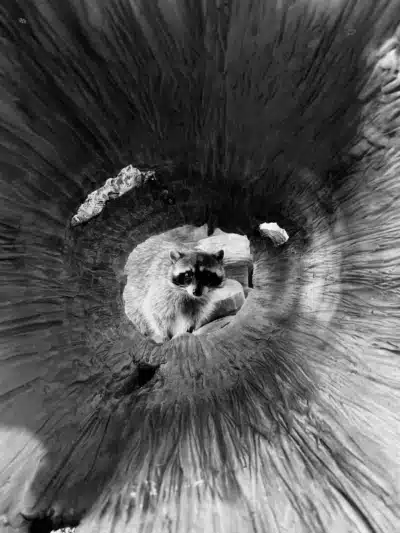
Todd Liles: So scroll down, Alex. Let’s look at some of the photos. All right. And all they do is just give the name of the person. They ask people to go out and just take real photos with their iPhone, send it to them. This one was put on Instagram from Alex Jiang, and you can see Alex’s Instagram. And then that’s it. You just tag it with “I shot this on my iPhone.” You post it and you send it to Apple. They loved it. They selected it. It’s a beautiful multicolored apartment building. You see a basketball goal. You see four palms. I don’t know where they are or what they’re doing, but it pops off the screen. It’s vibrant. Scroll down to the next one. Here is one. It’s black and white, and it’s a raccoon looking at you through what looks like a hollow tree trunk.
Roy Williams: A hollow tree trunk.
Todd Liles: A hollow tree trunk.
Roy Williams: A hollow tree trunk.
Attribution: Blake Marvin/Apple
Todd Liles: Right. You can’t see what’s outside of the tree trunk. It’s cut off. You don’t know why the raccoon’s there. You don’t know what he’s thinking, but you see it. Let’s see the next one. Now, hang on a second. This almost looks Monet.
Roy Williams: It does. It does look Monet.
Todd Liles: Can you see how they’ve done it?
Roy Williams: No.
Todd Liles: Look at the detail and see if you can figure out what they did.
Roy Williams: They’re shooting it from underwater.
Todd Liles: They’re in a pool.
Roy Williams: They’re shooting it from underwater. And that’s what gives it the blurry texture. And so you’re seeing a building made of straight lines, but none of the lines are straight. You’re imagining they’re straight lines, but something is distorting those lines. And it hit me. What has to be water.
Todd Liles: Yeah.

Darren Soh/Apple
Roy Williams: Yeah. You see bubbles now in the upper right corner. I see now the evidence that it is water. And then I see some little things of the ripples on the surface of the water. But that’s a brilliant, brilliant photograph. That’s amazing.
Todd Liles: And so a real user used just their iPhone and then they loaded this, they tagged Apple, “I shot this on my iPhone.”
Roy Williams: Unbelievable. Absolutely unbelievable.
Todd Liles: Let’s see some more. Look at that.
Roy Williams: Oh, wow.
Todd Liles: It’s a tennis court. And this tennis court is this beautiful orange, almost between a Tennessee orange and maybe just a little bit hint…
Roy Williams: A bright white line down the center there.
Todd Liles: With a crack.
Roy Williams: And the net. And then so everything is perfect except this one weird wandering, meandering crack that kind of wanders across, but it doesn’t go all the way across. It stops just under the net.
Todd Liles: I think there may be one or two more. Alex, let’s see what we’ve got.
Roy Williams: Wow.
Todd Liles: Oh yeah, look at that.
Roy Williams: Gee.

Attribution: Dina Alfasi/Apple
Todd Liles: I’m not even 100% sure how they did that. But there is no in-system manipulation. This is all just as advertised. Someone, somehow, shot this with an iPhone. What we’re looking at is looks like asphalt. It looks like the reflection of a person with a water heart behind them. I got no idea how they did this, Roy.
Roy Williams: No, it probably is, it’s a puddle. It’s a heart-shaped puddle on a road in the evening. And so the silhouette of the photographer…
Todd Liles: It’s upside down.
Roy Williams: Yeah. The silhouette of the photographer. Now, this is cool.
Todd Liles: Very cool.
Roy Williams: Now, the photographer is taking a person standing, looking into the pool of water, and they’re at an interesting angle. I don’t know, I’m guessing.
Todd Liles: No, I think you’re right. I think if you look at it upside down, the photographer’s over here catching them at the perfect moment as they’re walking by. So it is a reflection. So I thought you would like this.
Roy Williams: No. This is nice, unbelievable. This is really extraordinary.
Todd Liles: Let’s see if there’s another one on there. Look at that one.
Roy Williams: Oh, wow.
Todd Liles: That’s just classic.

Attribution: Elizabeth Scarrott/Apple
Roy Williams: Yeah. See, what happens is it’s the little girl in an obvious wild, wild, dangerous wilderness environment and the fact that she shouldn’t be there. But she’s looking at something or someone off camera, and you’re hoping it’s her mom and not a bear. You know what I mean? Because this girl in that environment, it’s a juxtaposition of adorable little girl in a really dangerous moment, and she’s looking at something off camera that you can’t see. And so the mystery. We need to know what she’s looking at and how did she get there and is she safe? Those are all the things that it brings out of you all at once.
Todd Liles: There’s something primal about this photo. It hits me immediately.
Roy Williams: Oh, yeah. Oh, yeah.
Todd Liles: A recurring dream that I would always have would be of this little girl plucking love-me-nots. And you couldn’t quite hear, but when it was love-me-not, it was always powerful and scary. She was in black void.
Roy Williams: Wow.
Todd Liles: And it ends with her having a truckload of love-me-nots dump on her and crush her. And this brings me there. It’s like this little person in this place that she shouldn’t be in.
Roy Williams: Wow. Yeah.
Todd Liles: And she doesn’t necessarily look what she’s…
Roy Williams: She doesn’t look afraid. She doesn’t look afraid.
Todd Liles: She’s staring off into a distance, and there’s something in her mind. You don’t know if it’s curiosity. You don’t know… It’s just something. Let’s see if there’s one more, and then we’ll wrap this one, Alex. They love. Look at that, another…
Roy Williams: Again, yeah. These are just like… This just, and the purpose of this was to make you understand the infinite possibilities…
Todd Liles: Yes.
Roy Williams: That you have with the phone that’s in your pocket.
Todd Liles: And this, by the way…
Roy Williams: Or the camera that’s in your pocket.
Todd Liles: Yeah.
Roy Williams: Yeah.
Todd Liles: And, Roy, this is from their 2019 campaign. They’re shooting movies on these iPhones now. And that’s where it eventually elevated to is shooting…
Roy Williams: Breathtakingly brilliant idea. Devastatingly well-executed.
Todd Liles: Very well-executed.
Roy Williams: Wow.
Todd Liles: And the beauty, beauty, beauty of all of this is how gorgeous it is. But they leverage social media with Instagram and have all of these people that are using iPhones that are artistic. I shot this with iPhone.
Roy Williams: Wow.
Todd Liles: And they’re just getting loaded all over the place and just a brilliant example. And it is Frank, but it is Monet as well. And I thought you would like that.
Roy Williams: There is a, it’s a very, very old, old quote. But today it’s more useful and more relevant maybe than ever. Among photographers, they’ve always said the very best camera is the one you have with you. And if you don’t have it with you, it’s not a camera you can use. And this is back whenever photographers would have lots and lots of cameras. What’s the best camera in the world? It’s the one you have with you. Whatever you have with you, that’s the one. Because that’s all you’ve got.
And then who would have ever dreamed when we were growing up that someday you would carry in your pocket a telephone that would reach anywhere in the world that was wireless, and it would make movies and take high-resolution still photographs in full color? Because I remember, I’m a little kid, there’s no such thing as color cameras. They were all black and white. And the idea of being able to make a movie on something you would carry in your pocket that ran on batteries and didn’t use film was space-age fantasy stuff.
Todd Liles: Roy, we live in the future. Right now…
Roy Williams: We’re time travelers.
Todd Liles: We’re time travelers. We are doing a broadcast television show at a higher resolution and higher quality that could have been done with the most amount of money in 1980. Maybe 1990. The cameras that we have here are so much better than what was available 20 years ago. _
Roy Williams: A bit of a million-dollar studio can now is just several thousand dollars.
Todd Liles: Yeah. It’s amazing. All right, Roy, we talked about specifics, and we went into deep specifics today. What’s the one thing you want the audience to take away?
Roy Williams: Have the courage to say things with great specificity. Whether it’s something you’re describing that is just vivid and emotional or whether it is a price of a product. The more specifics you give people, the more confidence you give them.
Todd Liles: Wonderful. All right. Thank you so much for taking your time to listen to this episode. We really appreciate it. If you’ve enjoyed it, we ask that you would like, that you would subscribe, and that you would share this with someone who needs to hear it. Maybe it’s your wife, maybe it’s your business partner. If you want to connect, it’s very easy to do that. You can send me an email to Todd@toddliles.com, or you can just head over straight to the website, toddliles.com. You’ll find more information there and you’ll find a way to connect. I would love to visit with you. That’s it for today’s episode, and we’ll see you soon.

We don’t just talk theory; we break it down so you can apply it. Join us as we reveal the secrets behind the most compelling ads ever created and help you wield the power of words to grow your business.
You can schedule a free call with Todd here.
- The Discipline That Separates Smart Advertising From Wasted Money - October 4, 2026
- Why the Ads That Make You Feel Always Win (and Logic Rarely Does) - September 10, 2026
- Why Safe Brands Get Ignored and Bold Ones Win - August 26, 2026