
In 1971, a 23-year-old copywriter named Ilon Specht wrote four words that changed beauty advertising:
Because I’m worth it.
Not because he’ll notice. Not because your husband will love it. Not even the version most of us remember: Because you’re worth it. The original line was first person.
I’m worth it.
That distinction tells us something important about how advertising to women has evolved over the last fifty years. Because great advertising rarely invents a cultural desire. It notices one that is already moving and gets there first.
The 1970s sold self-permission.
Women had been buying cosmetics, clothing and hair products forever. What began changing was the justification. L’Oréal’s line did not tell a woman that coloring her hair would make her prettier for someone else. It gave her a reason to spend more money on herself.
I am worth it. The authority had moved. That was the revolution. L’Oréal itself describes Specht’s 1971 line as a challenge to the advertising norms of the time and says it was created for its Préférence hair-color campaign as a statement of a woman’s own worth. (L’Oréal Paris)
Advertising increasingly reflected a woman who could want something simply because she wanted it. Call it empowerment if you like. I think it was permission. Or, more precisely, permission she gave herself.
Because I’m Worth It.
By the 1980s and ’90s, advertising had moved from permission to possibility.
The woman had the career. The clothes. The body. The perfume. The apartment. The vacation. Consumption became one of the ways independence and identity could be displayed.
And then the supermodels arrived. Cindy Crawford. Naomi Campbell. Christy Turlington. Linda Evangelista. Fashion advertising wasn’t terribly concerned with whether the woman seeing the ad resembled the woman in it. That was almost beside the point. The distance was part of the attraction. The woman in the ad was cooler than you. More beautiful. Younger, thinner, at a better party. And she had cooler friends.
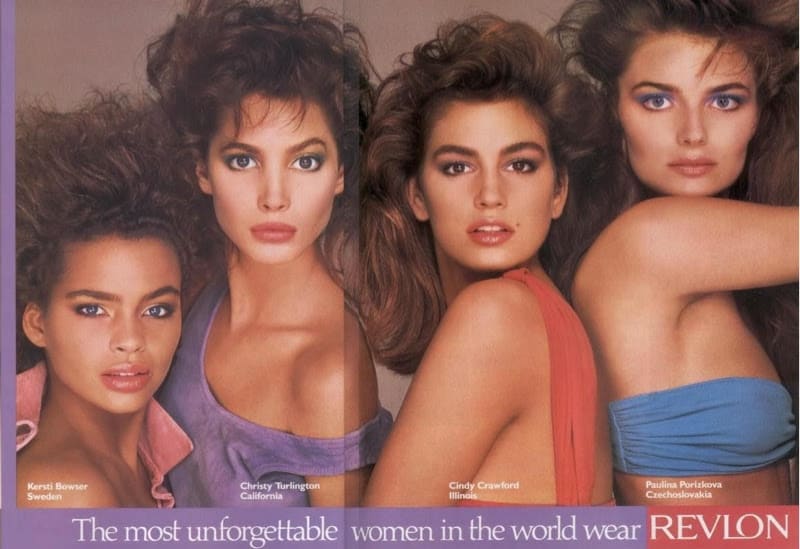
You weren’t being shown yourself. You were being shown a world you wanted access to.
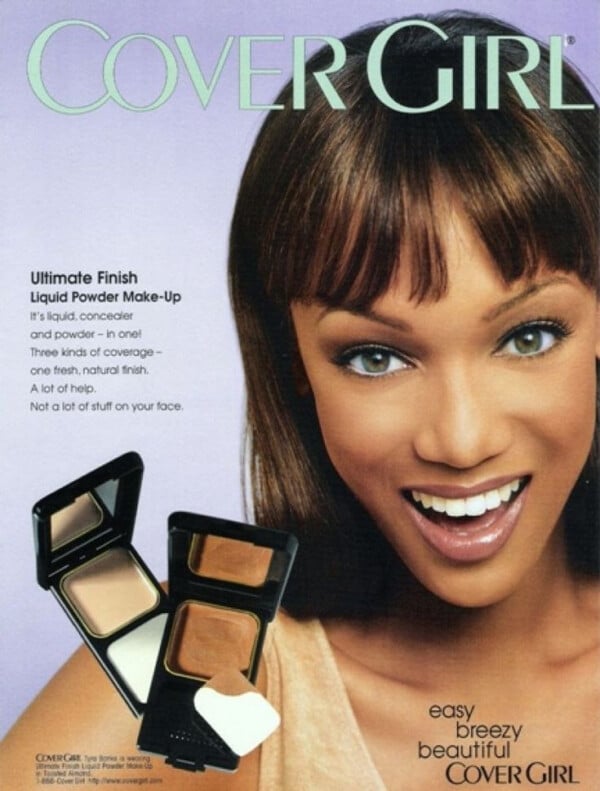
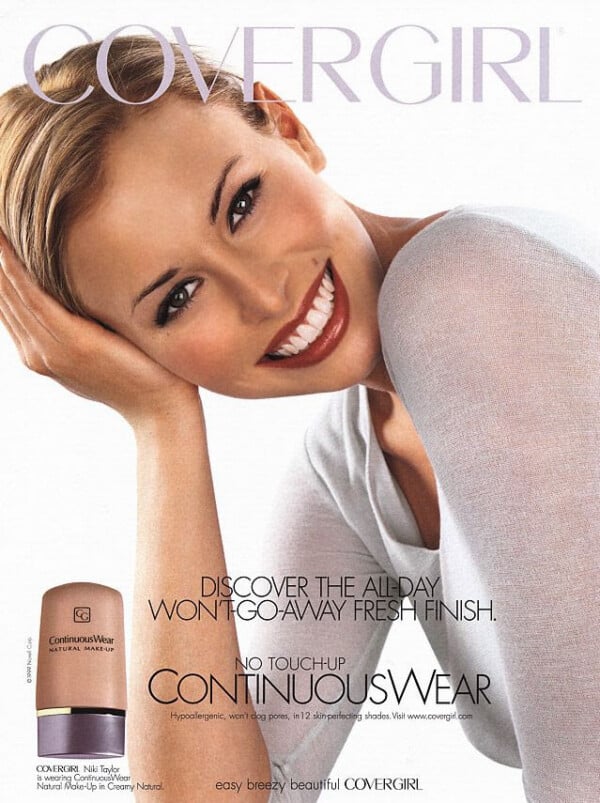
CoverGirl gives us a slightly more approachable version of the same idea. In 1997, Grey Advertising launched:
Easy, Breezy, Beautiful CoverGirl.
WARC’s history of the campaign describes CoverGirl deliberately moving beyond its old wholesome “girl next door” positioning. The new CoverGirl was supposed to feel exciting, flirty, fashionable and fun—and the campaign featured an assortment of established and emerging models. (WARC)
This was aspiration made more attainable.
Not:
You already are the ideal.
More:
This version of beauty is within reach.
Advertising still said:
Look at her.
Then:
Want what she has.
And somewhere underneath:
Perhaps you could become a little more like her.
It worked magnificently. Until something began to crack.
The 2000s began questioning who was allowed to be the ideal.
Women were supposedly liberated now. So advertising built on the proposition:
Become the best version of yourself. Get fitter. Smoother. Younger. Healthier. Get more confident. Get your life together. The ideal was hers for the taking if she just tried hard enough. Instead of simply aspiring to her, women were increasingly encouraged to continually optimize themselves.
Then, in 2004, Dove did something remarkable.
It launched its Campaign for Real Beauty.
Women appeared in beauty advertising who were not presented as conventional fashion models.
Different bodies. Different ages. Different faces. Dove says the campaign was created specifically to challenge the narrow beauty stereotypes women had become accustomed to seeing in advertising, using unretouched images of women outside those traditional standards. (dove)
Dove wasn’t asking:
Wouldn’t you like to look like her?
It was asking:
Why doesn’t she already count as beautiful?
That was a much bigger question. And the advertising industry has been wrestling with it ever since.
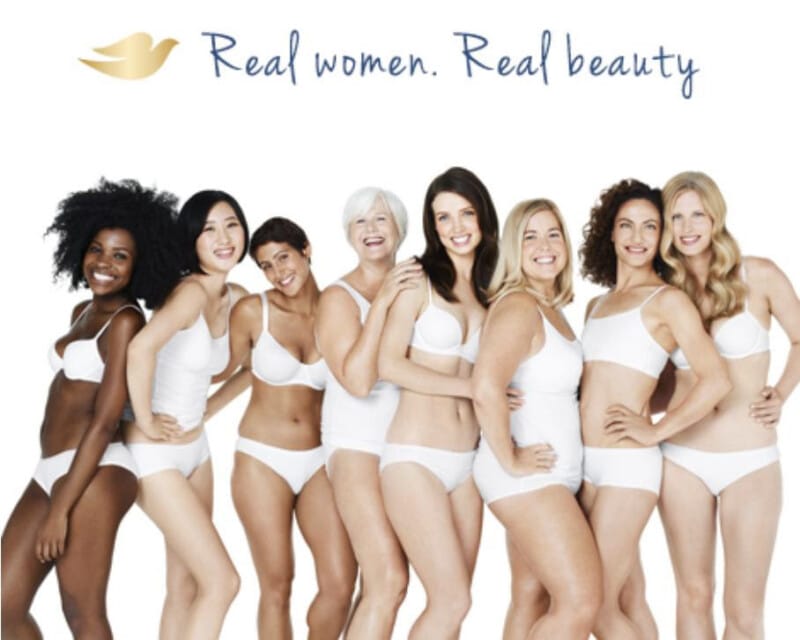
The 2010s latched onto the Real Beauty, and turned it into empowerment.
Brands selling to women were discovering feminism. Women were strong. Women were fearless. Women broke rules. Ran companies. Raised strong daughters. Women had curves. Wrinkles. And stories. For a while, you could hardly sell deodorant without liberating someone. Some of it was excellent. Some of it simply wrapped conventional beauty advertising in the language of empowerment, as though stamping a woman with the word “EMPOWERED” was good enough.
Women learned the difference. Because representation without authenticity feels a lot like casting. And empowerment declared by a brand is considerably less interesting than empowerment demonstrated by a person.
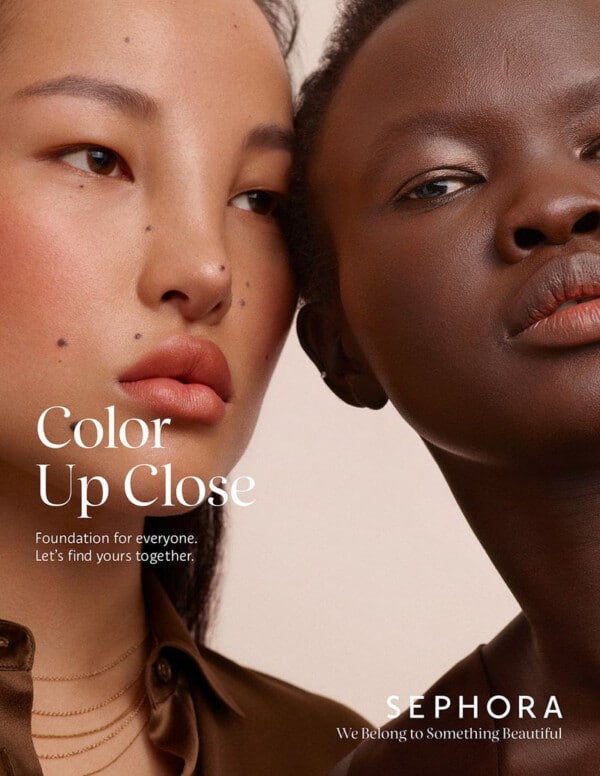
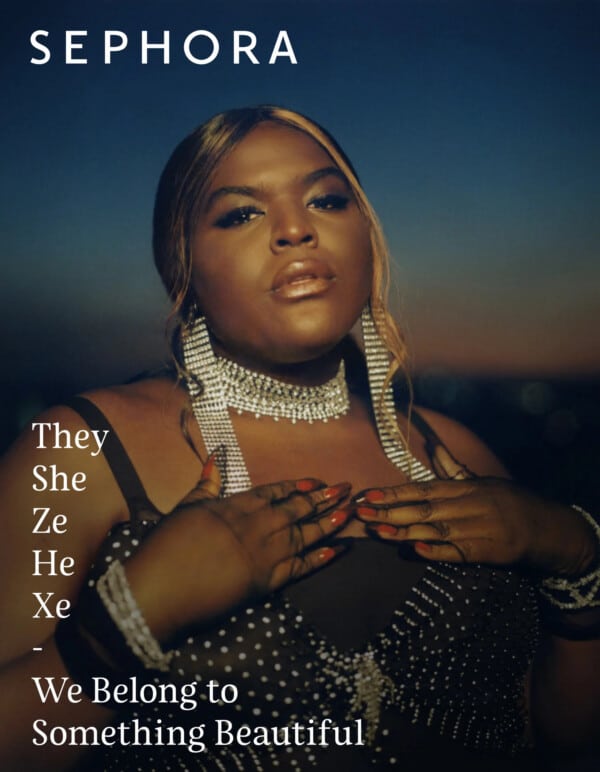
Then, in 2019, Sephora catapulted almost exactly where the culture was heading:
We Belong to Something Beautiful.
Ooh. There it is.
Not:
Be beautiful.
Not:
Become beautiful.
Not even:
You are beautiful.
We belong.
Sephora says it introduced the tagline and manifesto in 2019 to reinforce its commitment to fostering belonging among customers and employees and to pursue a more inclusive vision of beauty retail. (Sephora Newsroom) Beauty had moved from an ideal you pursued to a world you were invited to enter. That is a profound change in five words.

And now look at the sequence:
Because I’m Worth It.
Easy, Breezy, Beautiful.
Real Beauty.
We Belong to Something Beautiful.
You can almost watch fifty years of culture change in four advertising lines.
And there is evidence that the change matters.
This isn’t simply a philosophical argument about representation. There is a commercial one. Kantar reports that 52% of consumers say they trust a brand more when its advertising reflects their culture.(Kantar)
And in 2024, the Unstereotype Alliance—an initiative convened by UN Women—published a global study conducted with researchers from Oxford University’s Saïd Business School. It analyzed 392 brands across 58 countries. The researchers found that inclusive advertising was associated with better outcomes including sales, financial performance, customer preference and loyalty, brand equity and market competitiveness. (Unstereotype Alliance)
So yes. Representation matters. But I think marketers can draw the wrong conclusion from that. They can conclude that aspiration is dead. It isn’t. Women did not suddenly stop wanting fantasy.
We did not stop wanting the beautiful hotel. The impossible dress. The magnificent vacation. The fabulous dinner. The bikini that makes us stand differently when we put it on.
People still want products to take them somewhere. That is one of advertising’s oldest and most useful jobs. What changed is the entrance requirement.
There is a profound difference between:
I want to be her.
and
I can imagine myself there, with her.
Representation doesn’t have to mean replacing fantasy with ordinary life. It means creating an open door into the fantasy.
Old aspiration said:
Look at her. Don’t you want to be her?
The strongest advertising now says:
Look at that life. And somewhere in the image, the story or the idea, the customer needs to be able to think: I could be there.
Aspiration hasn’t disappeared.
It just changed zip codes. And perhaps Sephora already said the rest.
We belong to something beautiful.

- Marketing to Women Has Changed. The Evolution of Aspiration. - October 2, 2026
- “We Care” Is Not a Marketing Strategy - July 13, 2026
- Why Great Brands Are Unreasonable - June 22, 2026