
Watch above or read below.
Matthew Burns:
Jack has something he wants to talk about today.
Jack Heald:
Oh man. We’re just going to drop it there.
Matthew Burns:
Yeah, this is on you, my friend.
Jack Heald:
Okay. Well, let’s talk about what I consider to be the giant pile of elephant dung in every marketing department room. And that is PPC, pay-per-click advertising. By the way, so can I just go off? Is it okay if I just go off?
Matthew Burns:
Yeah, be cantankerous.
Jack Heald:
Okay. I remember when internet advertising first became a thing, and the promise was to quit wasting your marketing dollars sending messages to people who aren’t interested in what you’re selling. We’re going to make sure that every penny you spend on advertising goes to people who are potential customers for whatever it is you sell. That was the promise. And who wouldn’t react positively to that kind of promise?
Matthew Burns:
I want instant customers, please.
Jack Heald:
Yeah. Hey, put a dollar in, get $4 out. The only limit on the amount of money you make is how many dollars you put in. That’s a great… I love that idea. Nobody doesn’t love that idea. Here’s the reality. Roughly three decades later. This is not my opinion. This is a fact backed up by industry experts who don’t have an ax to grind. They just want to know what’s going on. Depending on how you measure it and where you measure it, somewhere between 70 cents and 95 cents of every single dollar you spend on pay-per-click advertising is untrackable.
Matthew Burns:
Okay. Wait a second.
Jack Heald:
Yeah.
Matthew Burns:
No way.
Jack Heald:
I did not misstate that.
Matthew Burns:
Oh, man.
Jack Heald:
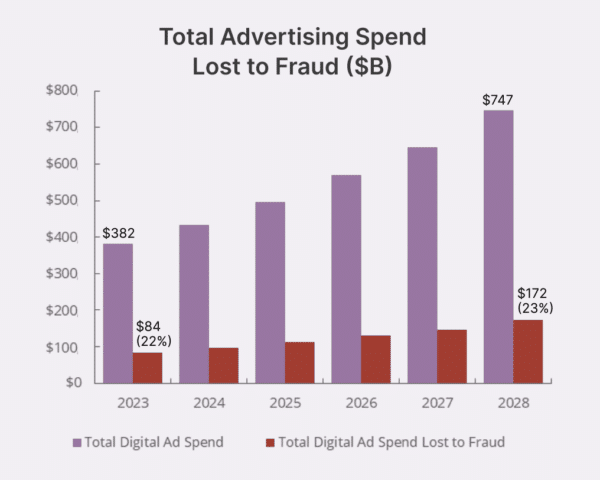
For every dollar you spend, let’s be generous. Let’s say it’s only 70 cents out of every dollar that is completely untrackable. 70 cents out of every dollar you spend is completely untrackable in PPC. Now, the other side of that coin is this. The second largest moneymaking criminal enterprise in the world as of August 2025 is pay-per-click fraud, digital advertising fraud. It is a multi-tens of billions of dollars a year illicit business. So when these people who study this say, “These dollars are untrackable.” We have to understand that it was designed that way. The whole digital advertising landscape is designed to be unauditable and untrackable. It’s built to be frauded, defrauded. That’s the word.
Juniper Research
Matthew Burns:
Fraudulent.
Jack Heald:
Oh, defrauded. I write words for a living. It’s built that way. And you know what? Digital advertising was the least expensive way to reach people. And you could still say, “Okay, so it’s actually, I’m spending three times more than it’s actually recorded in order to reach this person, but it’s still the best deal out there.” I could almost understand it, but it’s nowhere close. It’s not in the top 10. It’s one of the worst possible ways to spend your advertising dollar.
Matthew Burns:
Okay. So wait a second so attribution is the key here? So attribution was promised that you could attribute where things were coming from, and now 70% of the time, you can’t.
Jack Heald:
Conservatively.
Matthew Burns:
So it was promised you could watch where everything came from. So if we’re going to throw the gauntlet, let’s throw it on the conservative side just to let nobody yell at us on the other side. But 70% is untrackable. And so you can’t attribute it to the fact that those leads or your business is growing because of this thing 70% of the time.
Could you go to the doctor and be okay with 70% accuracy? Sorry, with 30% accuracy- 30% accuracy. 30% accuracy in the diagnosis. No. Do you know what I mean? The only place I know you could be accurate 30% of the time is a Major League Baseball player at the bat.
Jack Heald:
Okay. That’s fair enough.
Matthew Burns:
That’s the only one. I can’t think of any place in the world where you’re like, “Oh, you get it right 30% of the time?”
Jack Heald:
Yeah, no problem with that. You’re right, three out of 10. Yeah.
Matthew Burns:
Right?
Jack Heald:
Yeah. Major League hitter, you’ll make the Hall of Fame if you’re right, three out of 10.
Matthew Burns:
Right? That’s it. And when we say that kind of stuff to people, their brains are breaking, going like, “Oh my God. Yeah, that’s right. They don’t get on very often, yet we applaud them when they do.”
Jack Heald:
It’s worse than that, though. It’s not just that it’s built to be untrackable; it’s that it’s an auction where you’re bidding against other people who want this untrackable thing, and the company that’s selling you the click is the auctioneer. Yeah. I mean, think that through. It’s an awful way to try to reach people if money matters to you.
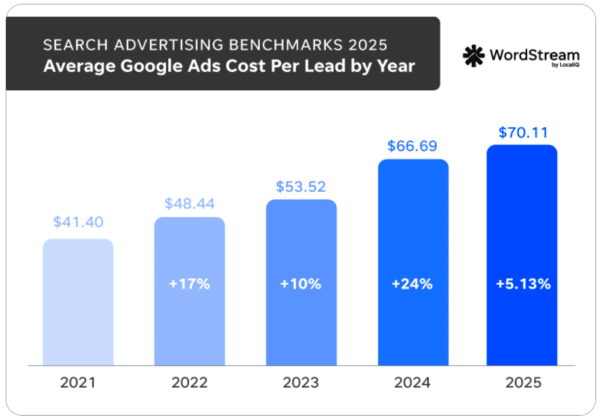
And here we are in the eighth month of 2025. And for the entire last year, I’ve heard a fairly consistent complaint from both customers and prospects, and that is that the amount of money they’re having to spend on pay-per-click every month just to stay even is going up. And there are multiple reasons for that. Let’s take the fraud out of it. Let’s assume that it’s 100% trackable and 100% legit. You’re still fighting with people who want to spend money the exact same way, and the person who bids the highest wins.
That is a system that’s designed to create one winner and everybody else be losers. And furthermore, to make sure that that one winner spends more money than anybody else. I’m not overstating it here. I’m making it sound like it’s horrible, but I’m simply… These are the facts. I’m not saying there’s no place for PPC. There’s a time and a place for it, but you got to understand you’re walking into a bear den, naked, slathered in honey and hoping that you’re going to get out of there with nothing more than a couple of scratches. It ain’t going to happen. Isn’t that a beautiful image? Naked walked into a bear den slathered in honey. Yes.
Matthew Burns:
Yeah. I’m never using PPC again, ever, not once. [laughter] Okay. So let’s put a point on this. The truth of the matter is that it is unfortunately getting more expensive. The research has been done, and you’re definitely not able to attribute where your clicks are coming from. So the money’s just going into the ether, and you don’t know why.
Jack Heald:
Yep.
Matthew Burns:
And it doesn’t seem to be as successful as it used to be. And that’s by us tracking with all of our clients. We can tell you that, but it’s everywhere. It’s round. It’s everywhere. So if all that’s the truth, the way to get around that is for people to know who you are before they go to the web.
Jack Heald:
And I probably should unpack a little bit. The reason there’s so much fraud is that there’s so much money to be made because it’s an auction, but also because so many people are looking for these things. So the more people who are looking for something, like snow tires. And if you’re bidding on snow tires- The guy in Phoenix just said bidding against no tires. There’s not a lot of bidding for snow tires in Phoenix. But if you’re bidding on snow tires, everybody else who’s bidding on snow tires is competing against you.
Let’s assume everybody is legit. You’re still competing against literally everybody in whatever geographical area you’ve happened to limit your bidding to, who wants to bid on snow tires. And because there are so many people doing it, there are a lot more people willing to engage in fraud because there’s so much money to be made.
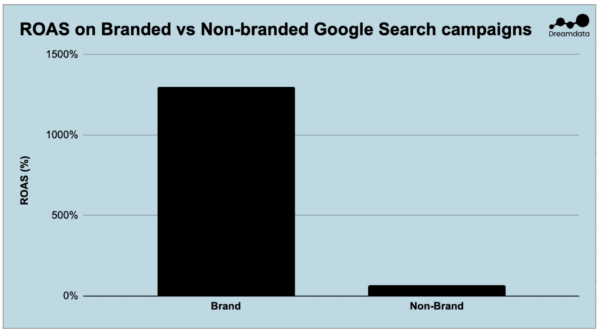
But if people are looking for your particular company name or the name of the particular snow tire that you alone carry, and they know that, and they go to Google, and they say, where can I find this particular your-brand-name snow sire? There are just not that many people who are doing that search. And because there aren’t that many people doing that search, there aren’t that many people bidding on it. In fact, most of the time, I don’t want there to be anybody but you bidding on it. And because you’re suddenly no longer in a competition, you can get those clicks for pennies on the dollar. And we see this over and over and over and over.
Matthew Burns:
Oh, okay. That’s brilliant. That’s what we’re going to talk about next time is we’re going to talk about how to have a cheat, how to have an unfair advantage. People go search for you on the web. So let’s talk about that. I want to actually go talk about Snazzle Dazzle Razzle.
Jack Heald:
Oh, great idea.
Matthew Burns:
We’re going to talk about that for next time. And listen, Jack, who’s our unofficial sponsor of this thing?
Jack Heald:
The unofficial sponsor of Crumbs for Giants is The Wizard Academy, which is an unconventional business marketing school located in Austin, Texas. One of the most magical places on earth, really. If you’re a business person, especially if you’re in marketing or communications of any kind, it’s way better than Disneyland. We rave about it because we are huge fans, because for both of us, it’s made a huge difference in our business careers. We don’t get anything for talking about it other than we love to share what makes us happy as entrepreneurs, as marketers, as business people, with folks like us. Check it out. Wizardacademy.org. Yeah, it’s an org. Brilliant. It’s not a con.
Matthew Burns:
You got it. All right. Well, listen, guys, this has been another episode of Crumbs for Giants. We love doing this. We’re going to come back every week. If you have a topic you want us to talk about, leave a comment. Follow us so you don’t miss one, and we’ll be back next week.
Jack Heald:
We’ll see you next week.

Each episode Matthew Burns brings in a fellow Wizard of Ads Partner to dispel misconceptions and offer actionable advice.
- Your Game, Your Rules: Why Copycats Can Never Catch You - September 22, 2026
- Afraid of the Camera? Your Business is Paying the Price - September 3, 2026
- The Unleveraged Asset EVERY Small Business Ignores - August 18, 2026