

You can feel it in your gut: you post something online, you boost it, you wait, and you get almost nothing for your effort. Did you do something wrong? No. The problem is that the public doesn’t always begin to trust a business, especially a home service business, on the basis of its online posts. They tend to build trust in a company that’s in front of them, out where they live — something more tangible than the old bits and bytes flying around in the cloud.
Home service owners struggle with being seen and believed, and it’s difficult to get customers to believe in your business on the basis of something they read or watched on a screen. You have to bring it to them somehow.
The Fudged Truth, or Even Lie, We’ve Been Sold
Digital platforms promise certainty in their results. Post something, boost it, follow the rules, and you’ll get seen. But the truth is confirmed again and again in that people don’t trust what they scroll over nearly as much as they trust what just feels familiar.
The post-serving algorithms of Instagram, Facebook, YouTube, and all the other companies change — sometimes frequently, and almost always opaquely for the public — but human memory does not.
That’s why social platforms (even organic) are expensive and unpredictable. You’re renting attention from a landlord who changes the rules without warning, and rented attention isn’t going to build much trust from the public.
Trust requires the more intense efforts of repetition and consistency. Not to mention presence: the real-world kind, which shows up before a homeowner ever types your name into Google.
How the Public Begins to Trust You
People decide who to hire based on recognition more than anything else.
“Have I heard of them?”; “Do they feel established?”; “Do they seem safe?”
These questions are answered before your website loads, and offline exposure — radio, mail, community presence, sponsorships — does what digital alone can’t:
It makes your company easy to remember when the consumer needs what you offer.
When your name feels known, the public stops evaluating your online presence and starts doing something akin to confirming it: their preconceived ideas for your business, formed offline, are reinforced by what they see online.
The only thing your website has to do is reassure the public that they’re seeing what they expect to see. Simple, right?
So that’s the order you build trust with consumers: offline publicizing first, then online validation second.
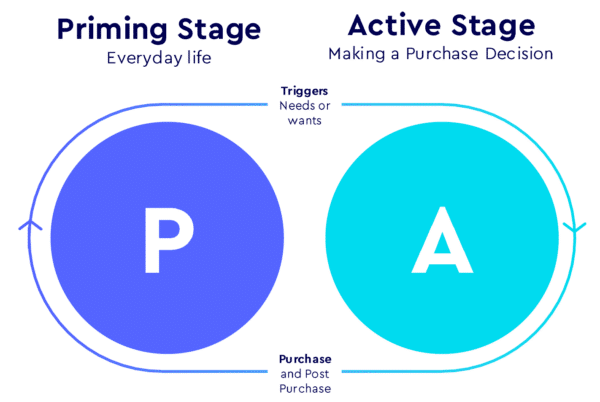
A study from Oxford University confirms this:
“The result of this priming bias is that much of people’s purchase-journey behavior is predetermined: in every category they buy from, most shoppers will already know which brands they’re going to consider; will typically consider fewer than three brands; and will end up choosing the brand they’re most biased towards.
The proportion of purchases governed by brand priming is huge: 84% of purchases consist of people choosing brands they’re already biased towards before they start shopping.
This pattern holds across all categories – whether for infrequent high-value purchases like cars or white goods, or regular everyday shopping like toothpaste or soft drinks – with the proportion of primed shoppers never falling below 70%.”
— WPP Media & Oxford University Research
https://www.wppmedia.com/news/how-humans-decide
A Real-World Example
One HVAC company that Wizard of Ads helped in North Carolina grew by becoming unavoidable in its community.
Over more than a decade, consistent, human-centered messaging helped turn that business from a regional player into a household name, growing from roughly $15 million to over $100 million in revenue even while reducing marketing costs as a percentage of revenue.
And that didn’t come from gaming the internet. It almost never does, does it?
Their success came from compounding trust via broadcast TV, then customers found the company online when they already believed in what they had to offer. Reviews matched expectations, and the story stayed consistent.
Their online presence worked because the relationship was already formed somewhere else.
Why This Matters for Home Services
Home service companies sell relief to the customer. You see the customer is stressed because something broke; money will leave their bank account either way. In those moments, they don’t want some kind of hypothetical “best offer” nearly as much as they just want the least risk.
Trust that’s been built offline lowers perceived risk, and then online assets simply prove that the choice is safe. If you try to reverse this order, your website or other web presence has to do a kind of emotional labor that it can’t really do.
The Simple Path Forward
We’re not saying you have to abandon your digital storefront, but you need to restore its proper role.
Here are a few things we’d recommend:
- Be present for the public, but don’t worry about perfectly targeting your audience.
- Have a single clear brand story; say the same relatable human truth everywhere for a long time.
- Use your online presence to confirm what your audience already feels. This can be done with reviews and photos as well as the tone of your communications.
- Play the long game, and think about your presence over multiple years. Trust compounds the way reputation does — slowly, then all at once.
Customers trust what they recognize, so build recognition offline and let the internet confirm it for them.
For years, I was skeptical of the efficacy of offline advertising. If you’re interested in seeing the data, or would like to discuss how to build trust with your customers, you can book time on my calendar here.

- Some Businesses Scale Calmly, Others Don’t: The Hidden Reason - February 18, 2026
- How Should I Plan for Growth Despite Economic Uncertainty? - February 11, 2026
- Why Your Online Trust Is Built Offline (and Always Has Been) - February 3, 2026