
When revenue stops rising, business owners get uncomfortable.
Wouldn’t you?
The business isn’t failing, but your momentum feels uncertain. And uncertainty makes stillness feel dangerous, so we fall back on our instincts. Add another service, say yes to more types of work, widen the net, and so on. It will feel like progress, but it often fuzzes up your business’ focus and dilutes your ability to do what you do best.
Why Expanding Our Offering Feels Like the “Safe” Move
Expanding our offering gives us the feeling of control. Does it seem like you have less demand now? Great: maybe you should sell more services. More services means more chances to win work and make money, right?
But customers don’t experience expansion like this. It can even be confusing for them.
Especially right now, when buyers are cautious and overwhelmed, more options don’t necessarily feel more helpful. They might even feel risky. When people are unsure, they want to feel confident choosing one single great company instead of picking from ten merely competent ones.
That’s where specialization comes in, and might help a lot.
What Customers Are Actually Buying
Customers want to be sure your business is for them, and they want to know if you have repeat experience doing the thing you’re selling. They want to know, most of all, if working with you will be easy or if they will regret it.
When you offer a wider selection of services, the answers to those questions get less certain, which creates hesitation on the customer’s part.
The result is often that while the brand is expanding its offerings over time in increments, even if each addition makes sense operationally, the brand will become harder to explain.
The business might get fewer referrals, and sales conversations can get longer as customers ask more questions.
Nothing is literally wrong, but the business can somewhat lose its “definition” for the customer.
The good news is that all you often have to do to fix this is pull back and focus on what you’re already known for.
The Hidden Cost of Being “Full Service”
Being broadly capable feels like strength, but in the current market it might be read as uncertainty. Full-service businesses pay a sort of tax in business difficulty. Customers compare them to other companies more and haggle on price more often, and it’s harder to explain things to them. Also, repeat purchases can go down.
Customers remember specialists, though. Even if they use generalists elsewhere, they refer their friends to specialists.
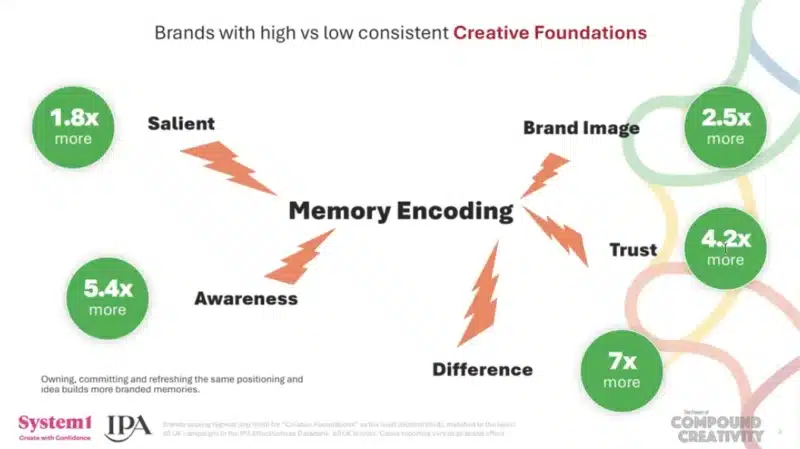
Businesses that consistently stand for the same thing are 7x more differentiated from competitors and 4.2x stronger on trust than businesses that spread their message across multiple offerings.
And these days, being remembered for a referral matters more than ever, when decision cycles are longer and trust carries more weight.
When Expansion Actually Works
Expansion works when what you expand with is adjacent to your core service, and when your best customers repeatedly ask for it. It works when it simplifies the customer’s life.
One of our clients resisted expansion for years, but when they finally added a new offering, it was a direct extension of what customers already trusted them for. It was a huge success, because the message and the identity of the company didn’t change. The expansion felt obvious, which was a huge help.
A Simple Filter Before You Expand
Before adding anything new to your business, ask a few questions to yourself. Will the expansion of services make your business easier to explain? Will customers remember you more clearly? Does this reinforce what you’re known for, or compete with it? And if you aren’t sure about these answers, don’t act just yet.
It may be that your stagnant revenue means what you do best needs to be clearer to the public.
The Real Reason Focus Feels Risky
Focusing your business and being obvious about what you do and don’t do might feel scary because it closes doors, but unfocused businesses close doors too — they just do it invisibly, through customer hesitation or forgettability.
Being clear about what you do might open fewer doors, but it opens the right ones.
A Final Thought
When your revenue stagnates, you might feel inclined to offer more services. But more often, the better move is to more clearly-define what you do. Specialization helps people remember you, and better memory of you helps people pick you over your competition.
In cautious markets, the businesses that grow are the ones that are easier to choose.
Want to reach your growth goals faster?
I treasure entrepreneurs who are truly committed to the undertaking. Since you invested the time to finish this to the end, I want to meet that with some attention of my own.
I usually offer a deep 2-hour 1:1 deep coaching session for $1k but will give you the session for free as a reader of this article. Book your Coaching Call here.

- How Do I Measure the ROI on Brand Advertising? - September 7, 2026
- How Do I Word My Ads So I’m Remembered? - August 17, 2026
- Some People Say Our Ads Are Annoying. What Now? - July 29, 2026