
Watch above or read below.
Matthew Burns:
So, Jack, I was pondering something, and I’m going to ask you this question. I’m going to give you no context, and I’m going to say, why do you trust me?
Jack Heald:
That’s a really good question. Well, I’m going to give an answer that doesn’t read well, but it’s the truth. Okay. It’s been intuitive from the beginning. My gut has always felt good about you. Now, we’ve known each other for what, three and a half years?
Matthew Burns:
Something like that.
Jack Heald:
Yeah. You have demonstrated over that time that my gut was right. Yeah. But I actually trusted you before you’d had the opportunity to demonstrate that. And that reminds me of something you talked about. How do you get people to trust you before you’ve demonstrated that you’re trustworthy? If I recall correctly, you have something you… See, I’m turning the tables on you there.
Matthew Burns:
Well, it’s what I want to talk about, so I’m glad you did.
Jack Heald:
Oh, good, good. No, the first time I heard you talk about this, how to build trust thing, I was like, oh my God, Burns, that is fantastic.
Matthew Burns:
Okay. So I’m going to go back to what you said, though, and then it’s exactly right. I delivered on my promises. So you actually gave me your trust before you trusted me. You gave me your trust. You were like, “Okay, I’m going to trust that this guy’s going to do the thing.”
Jack Heald:
The key thing is it wasn’t a rational decision. No.
Matthew Burns:
No.
Jack Heald:
It was an emotional decision.
Matthew Burns:
Exactly. And then we started to work together. We got put on accounts together. I’ve stayed at your place now. We’ve grown together. And continuously between the two of us, when I asked for something, you delivered. When you ask for something, I deliver. I go out of my way for you; you go out of your way for me. So really, truly, trust is built over time, but yet I’ve asked a lot of professionals in the world, is trust important to help the sale, to close business?
And so the problem with that is it’s a conundrum because you actually now trust me. You know you can trust me because I delivered on time, but we want our clients or potential clients to trust us before they even take the chance.
Jack Heald:
And there’s the rub.
Matthew Burns:
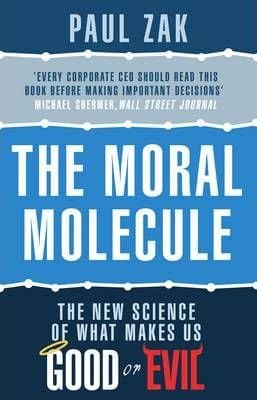 Okay. So what I figured out, and listen, I’ve done a bunch of research, but I have a book called The Moral Molecule, and it really set me thinking about what… I’ll put it in the comments, guys, but I think it’s Paul Zak that the book is by. Anyway, it talks about the reason why we trust things and what we need to do to build it. And it’s a great book. The first half of it’s amazing. And then, most books, unfortunately, the last half is usually a lot of reiterating stuff, but that’s okay. Read the whole thing.
Trust, real, true trust is only garnered over time. So, the problem is that if trust is needed before they buy from you, you actually have to develop a technique to gain trust at the beginning. So one of the ways you do that is by looking awesome.
And so it’s very superficial trust, but showing up in uniforms that are clean, having stores that are put together really nicely, speaking with elegance and calmness, shows up with an aesthetic that’s better than the average. You do that. People tend to… Every woman loves a sharp-dressed man. That is the thought process behind that. And I don’t know the reverse of that. Men think women are sexy. I don’t know what the reverse is, but there’s got to be a reverse of that.
So the first thing is to show up – so I mean, you think about it from a business perspective, it’s wrap your trucks, make sure they look really nice and clean, make sure the uniforms are nice and pressed. And all of the front-facing employees have scripts that they say that they have down pat, that they’re not stumbling over things, they’re not unsure. They know their prices, they know their products. Confidence is going to build a lot of that. But it’s superficial. It’s very easily lost.
Jack Heald:
Superficial professionalism and consistency.
Matthew Burns:
And aesthetics. And I’m going to go to aesthetics.
Jack Heald:
That’s a really good point.
Matthew Burns:
Yeah. Okay. It’s aesthetics, which also means that it’s easily faked, right? Which is why it’s superficial. My wife has never looked more beautiful than when she wakes up in the morning. I truly believe that, but I’ve seen her made-up face, and it’s fake. It’s not real. It’s not who she is, but damn, she looks good, and I’m going to show her off. But it’s aesthetic.
So we want to make sure that the first thing that we think about is that if you’re building a brand or if you’re helping a company build a brand, the whole be awesome, look great, and talk well… Because talk well is exactly the way you say that, not speak well. That’s what you want to do. You want to be able to do that. So now what I just did is I made a mistake, and this is the one that nobody really understands.
So Jack, you said that you had an intuition and really truly when we first met you didn’t trust me, but over a couple of interactions, you realized I was a human being with real problems and real anxiety about working with clients or you heard a story about my life and you went, “Oh my gosh, I can relate to that because I feel that way in one way or another.” So I really do think I can trust you.
And what I’m trying to get at is we trust when somebody trusts us first. And by trusting us first, what I mean is delivering a vulnerability. So I don’t mind making a mistake in front of people and owning up to my mistake because I’m human, and that happens, but how I take care of it is more important than what I did. Now, don’t get me wrong, if I murdered somebody, I’d probably… Well, I’d be in jail.
So we wouldn’t be having this conversation. It would be a completely different thing, but making a mistake is okay. And as long as we own up to it. Now people are saying –
Jack Heald:
Okay. Well, I want to ask you something. We tend to give trust when we are given trust, but how in the world does somebody who’s selling Moss-covered three-handled family credenzas out of a storefront give trust?
Matthew Burns:
Okay. So they share a piece of their soul.
Jack Heald:
Expand on that.
Matthew Burns:
Okay. So I had a really good example, and hopefully I can do this in a couple of minutes. So I went to the Wizard Academy, which, if you haven’t gone, look it up at wizardacademy.org. If you want to learn more about marketing, it’s where we learned it. It’s why we’re Wizard Of Ads Partners now, because we loved it. But I was at the Wizard Academy taking a course called Next Level Business. And one of the other students was in there, and he was a property manager. And so he had this guarantee, and his guarantee was, “If you have a problem within one of our properties, we’ll take care of it within 24 hours, guaranteed.” And so we were like, “Oh, that’s a great guarantee. So what’s the balance of that guarantee? If you’re guaranteed, or what do you give it? What’s your thing?” And he’s like, “Oh, no, we just do it.”
I said, “You’ve never missed?” And he’s like, “Well, no, no. Every once in a while, we’re not quite that…” He says, “But we stayed in communication, but you guaranteed within 24 hours, just because you’re in communication doesn’t mean you hit your guarantee.” So if you don’t put skin in the game, if you don’t trust people to not take advantage of you, then your guarantee actually, there’s no trust to the guarantee because everybody says, “Oh, we guarantee that we’re going to be the best service on the planet.” Well, to what end?
So a real guarantee: “Or what?” Or what is the thing? It’s the or what, because that has to come from you. It has to be your give-up. And then he was like, “Okay, well, what do you guys think?” We came up with an idea where we’d give one free month’s rent to you if we missed our 24 hours, because if it happened, would you be able to afford that?
Yes, I could. Okay, great. Could you put that money aside early in the year for 5% of that happening across all of your properties? And he’s like, “Yeah, we could totally do that. We have the money. Perfect. So that’s a great guarantee.” And I said, “And as soon as it happens, as soon as you’ve got to pay that one month’s rent, then you advertise that. Hey, I’m here with Anna. She rents from us at blah, blah, blah, one, two, three, any street, and unfortunately, we couldn’t fix her air conditioning issue within 24 hours because the air conditioning heating company, they couldn’t get a truck out to us in time and we promised that it would be … So she’s getting one month free rent.” And he’s like, “I can’t do that. That shows we made a mistake.” Yeah, it shows that you’ve made a mistake, and you paid for it and you fixed it and you made it worthwhile.
So I know it’s not really a vulnerability, but that’s a really great way of putting skin in the game, which opens you up for risk. When you’re open to risk, it means you’re opening up to the other side of the equation.
Jack Heald:
When it’s a real risk. Real risk. Our founding partner, Roy Williams, came up with a service guarantee for one of his clients, I don’t know, two decades ago, for One Hour Heating and Air. We arrive on time, or you don’t pay a dime. Yeah. Now, there’s a guarantee that’s got teeth in it that frankly should probably cause the person making that promise a little bit of anxiety. And that’s how I tell my clients, “You found a good guarantee if it scares you a little bit. That’s a good one.”
Matthew Burns:
That’s right.
Jack Heald:
Because it shows that you are actually putting skin in the game. Yeah.
Matthew Burns:
Yeah. And here’s the thing: that’s a guarantee, and it’s a great way to do it. And not everybody can do that.
Not every business has the ability to do a really awesome guarantee like that. So the other way that you show vulnerability… I say vulnerability and weakness are also just allowing people to see your true self. And this is a hard thing for most humans to do because we’re always putting up a guard upfront, but yet we want people to trust us when you can’t really…
When you think about the person you trust most in the world, it’s usually your spouse, your significant other. If you’re younger, it’s your mom or your dad. The best part about trusting those people just completely is that you know everything about them. You know all the good things. I mean, normally when you say, “Why do you trust that person?” Well, because she’s awesome, she makes me feel good, she kisses my owies, whatever it is.
But the actual reason why you can trust that person is that all those things are true, and you know when you can’t trust them, you know what their flaws are. And as soon as you know what their flaws are, you actually truly know the human. Until you truly know the human on the other side, you can’t trust them. So I want to leave this. I want to run this into our next episode, where we talk about why stories are so important.
Jack Heald:
If you want to be trusted, give trust. If you want to know how to give trust, basically, you show your soft underbelly. You make a guarantee that has actual teeth in it. Hey, let’s real quickly send people… Go check out wizardacademy.org.
Matthew Burns:
Yes, please.
Jack Heald:
Kind of the spiritual sponsor. We’re huge fans of it, and you’ll enjoy it.
Matthew Burns:
You want to get better at marketing. Yeah, your business wants to get better. That’s what you do: you learn more at the Wizard Academy. Yes. Thank you, Jack. You’re the best man. See you.

Each episode Matthew Burns brings in a fellow Wizard of Ads Partner to dispel misconceptions and offer actionable advice.
- Afraid of the Camera? Your Business is Paying the Price - September 3, 2026
- The Unleveraged Asset EVERY Small Business Ignores - August 18, 2026
- Watch this if you want to IMPROVE the way you communicate! - August 6, 2026