
Watch above or read below.
Matthew Burns:
Hey Stephen, why did you bring me here?
Stephen Semple:
I was reading through a book of famous advertising campaigns, and one of the chapters was on a perfume by Revlon called Charlie. At its peak, Charlie was the bestselling perfume on the planet. There was a point there where it was number one.
Matthew Burns:
Oh wow.
Stephen Semple:
For a little while. Now it’s since lost a lot of that, but what was really famous about that campaign was that it actually went against what a lot of the branding at the time was. So a lot of the branding at the time was celebrities. I am Coco Chanel. And so basically, the celebrity attachment was really strong, or there were really glamorous ads. We saw Ridley Scott Chanel ads, which are just like-
Matthew Burns:
Oh yeah, yeah.
Stephen Semple:
Beautifully shot, just like-
Matthew Burns:
Like super high glamor.
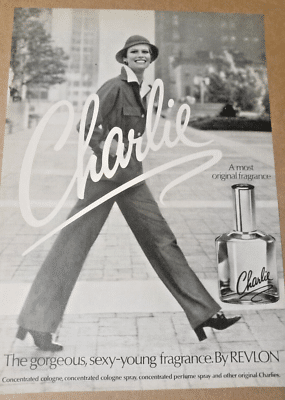 Stephen Semple:
Super high glamour or celebrity attachment. That’s how you sold perfume. Yeah. And then along comes Revlon, who does an aspirational ad where they created this fictional character, Charlie, this woman, Charlie, and made her very strong and this big presence, and did subtle things. She was taller than the men. She wore a suit. And a lot of the early ads she did not have on high heels. She carried a briefcase. It was very clear she was going to the office or leaving the office. And this is in the ’70s, at the beginning of women really entering the workforce and the feminist movement and all this other stuff. And she became… So instead of it being this sex appeal of, oh, this is what you do to attract a man, it was more, this is the woman I want to be.
Matthew Burns:
Correct. This is a woman who gets to own the world.
Stephen Semple:
This woman gets to own the world, and it was even stronger in the print ads than the television ads. And there are a few print ads that I’m sure you’ll share here.
Matthew Burns:
Yeah, they’re going to be floating all the way through this recording.
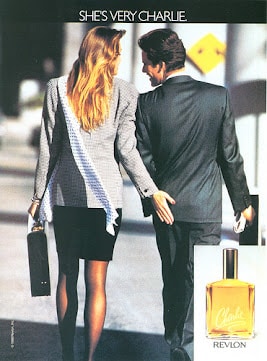 Stephen Semple:
Yeah. There’s one where she’s walking next to a guy, she’s taller, they both have briefcases, and she puts her hand on the guy’s ass. So she’s the one making the sexual advancement, like a completely different campaign, and it blew up. And then, in fact, when you track it, Revlon didn’t even manage it well because over time she started to appear in high heels and they started to make her more the center of sexual attention and all that. And guess what? As that happened, Charlie lost popularity.
Matthew Burns:
Well, but they built the brand on the aspiration of, I get to be what I want, when I want, why I want, which goes away when you become the center of attention. You’re not trying to become the center of attention. I’m just doing what I want because I want to do it. I’m independent. I’m capable.
Stephen Semple:
Yes.
Matthew Burns:
A thousand percent, they went against their brand promise.
Stephen Semple:
Part of their slogan was that they would talk about things, now the world belongs to Charlie, right? Which was also aspirational.
Matthew Burns:
Absolutely.
Stephen Semple:
And I just feel like they didn’t really understand the power of what they were doing there, that they were making because it put the perfume industry on its ears, because it was not about glamor. It was not about being more attractive. It was about women aspiring to be that woman, which is not the kind of thing you would traditionally think about perfume.
Matthew Burns:
Yeah. And it’s funny because when you first told me about the campaign, I went to do my own look, and I didn’t go to the print ads. And I agree with you wholeheartedly. The print ads are great because what they were able to do was set a stage and allow me to feel, to decide how to feel about that campaign, about that message, about the image, all of it. It was completely up to me how to feel about it. But then they made some television ads, which I don’t think were as good. I want to play one. So watch this.
Male Singer:
There’s a fragrance that’s here today, and they call it Charlie, a different fragrance that thinks your way. Yeah, they call it Charlie. Kind of young. Kind of now. Charlie. Kind of free. Kind of wow. Charlie. It’s a kind of fragrance that’s going to stay, and it’s here now. Charlie. Now the world belongs to Charlie by Revlon.
Stephen Semple:
Now imagine if they’d taken that ad and put it in an office, or they made it an office party where it was clear she was a senior executive.
 Matthew Burns:
Yes.
Stephen Semple:
That ad would work.
Matthew Burns:
Yes.
Stephen Semple:
All they had to do was change it a little bit, and I still think it would have had the power.
Matthew Burns:
Yeah, I know. But I don’t know, some of the lyrics are like saying that she’s young and saying that she smells sweet.
Stephen Semple:
Make the lyrics powerful.
Matthew Burns:
Correct. Charlie is looking forward. Charlie’s in charge. I agree wholeheartedly. What I didn’t like about it was that they were telling me how to feel about Charlie instead of allowing me to feel something about Charlie.
Stephen Semple:
Correct. Also, doing the classic, it’s about attraction rather than women aspiring to be that woman.
 Matthew Burns:
Because this message was specifically for… It wasn’t about me… They weren’t trying to get the man to go buy the perfume for the woman. That’s not what this ad was to do. This was the woman who was going out to own herself. And I love that. Everything about it was right. And like you said, they slowly but surely… I’ve got a couple in here where we’ve shown her walking in stilettos next to Santa Claus, which again, it’s a mixed message, and I don’t really like it. I mean, watch what we’ve got up here. But guys, what do you think? Was this a structured mistake by Revlon to slowly but surely lose grip of the message? Could this campaign have run longer? I mean, and what do you think, Stephen? How long could this campaign have gone on?
Stephen Semple:
They could have run this campaign forever if they kept it as an emotion, being aspirational. That’s where they blew it. They blew it because they didn’t keep Charlie as an aspirational image of a person that somebody wanted to become.
Matthew Burns:
There was the right message at the right time, and they didn’t keep it consistent, right?
Stephen Semple:
Yeah. They had one print ad where they really blew it, where it’s like, did you ever look at Charlie’s face? Because they also came up with some Charlie makeup. For a woman in an office environment, do you want that expression in your head of the question of, “Are people looking at my face?” Clearly, an ad created by a bunch of dudes in a boardroom.
Matthew Burns:
In a boardroom. Oh, man.
Stephen Semple:
And this is when it tells me they accidentally created a campaign where part of the campaign was super successful because this one was also done in the ’70s, and part of it was a complete fail because they didn’t actually understand what they had created and why it was working. And this is the reason… And it’s funny, we often talk about strategy, and this is where that’s important, is actually understanding here’s what we’re actually trying to do and keeping true to that.
Matthew Burns:
Yes. No, a thousand percent. No, I agree with you wholeheartedly. Great try. Good job getting to number one, and I’m sorry that you guys let it slide, Revlon. All right. Well, thank you, Stephen. Again, this is a good one. I appreciate it.
Again, I’m always looking for suggestions and ideas for ads that you want us to talk about. And tell us how much you want to know about the campaign. Stephen is a nerd and will go find the data and tell you all about the campaign. Things that make my tail wag are what I like to show. So we will come back with another episode of Sticky Sale Stories.

- Why Volkswagen bet everything on the Beetle - September 28, 2026
- The Problem With Almost Every Car Commercial - September 13, 2026
- This Ad Failed Because of One Simple Mistake - September 1, 2026